Board the Shinkansen (bullet train) from Tokyo to Kyoto — a sleek symbol of Japan’s precision and innovation. In just 2.5 hours, you’ll glide across the countryside at nearly 300 km/h, watching the skyline give way to rice fields, mountains, and, on clear days, Mount Fuji’s snow-capped peak.
When you arrive, Kyoto immediately feels different — slower, softer, steeped in history. Once Japan’s capital for over a thousand years, it’s the keeper of tradition and the soul of old Japan. Kyoto served as Japan’s capital from 794 to 1868, shaping much of the nation’s culture, religion, and art.
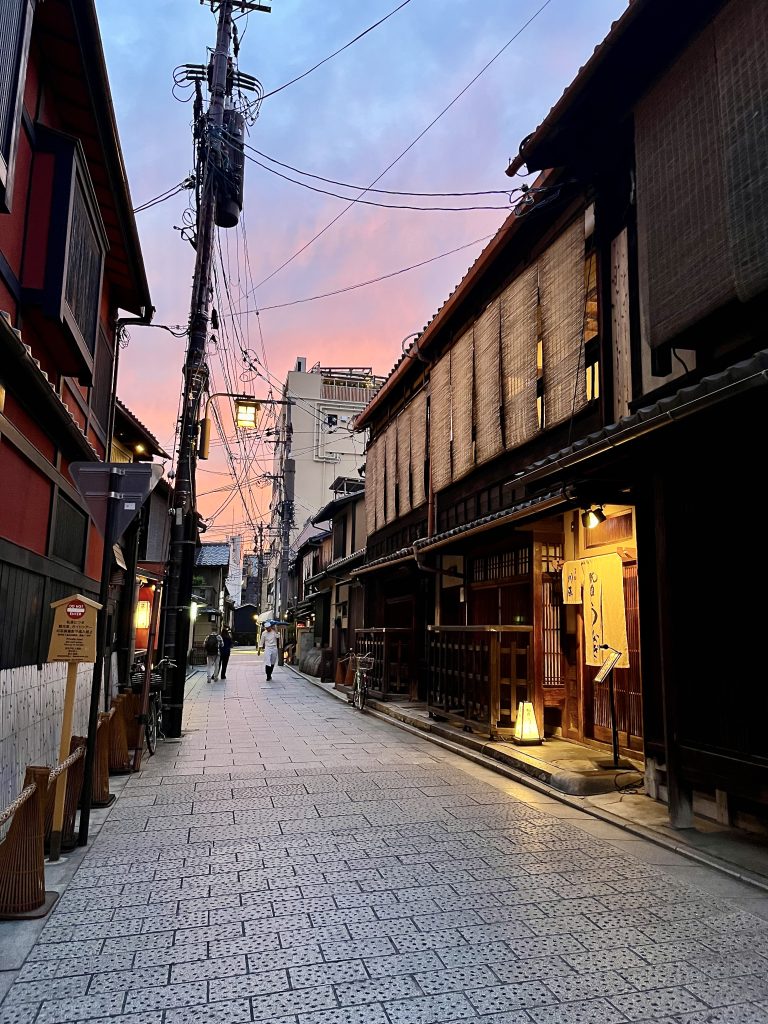
As the sun sets, head to Gion, Kyoto’s most famous geisha district. Lanterns glow softly over narrow cobblestone lanes, and wooden teahouses line the streets. If you’re lucky, you might glimpse a maiko (apprentice geisha) gliding by in her silk kimono, the sound of her wooden sandals echoing softly on the stones.
What to See & Do:
Hanamikoji Street: The heart of Gion, lined with ochaya (teahouses), boutique shops, and elegant restaurants.
Yasaka Shrine: A bright vermilion shrine between Gion and Higashiyama, known for its lantern-lit evenings and lively festivals.
Pontocho Alley: A narrow lane running parallel to the Kamo River, filled with intimate restaurants offering river views — perfect for a kaiseki dinner or yakitori and sake.
Kamo River Promenade: Locals sit along the banks chatting or playing music — a simple but quintessential Kyoto experience.
Insider Tip: I had the chance to visit Gion around 5–6 p.m., in that occasion we saw 3 geisha. Be respectful — observe from a distance and avoid blocking their way for photos.
Fushimi Inari & Southern Kyoto — Gates of Eternity
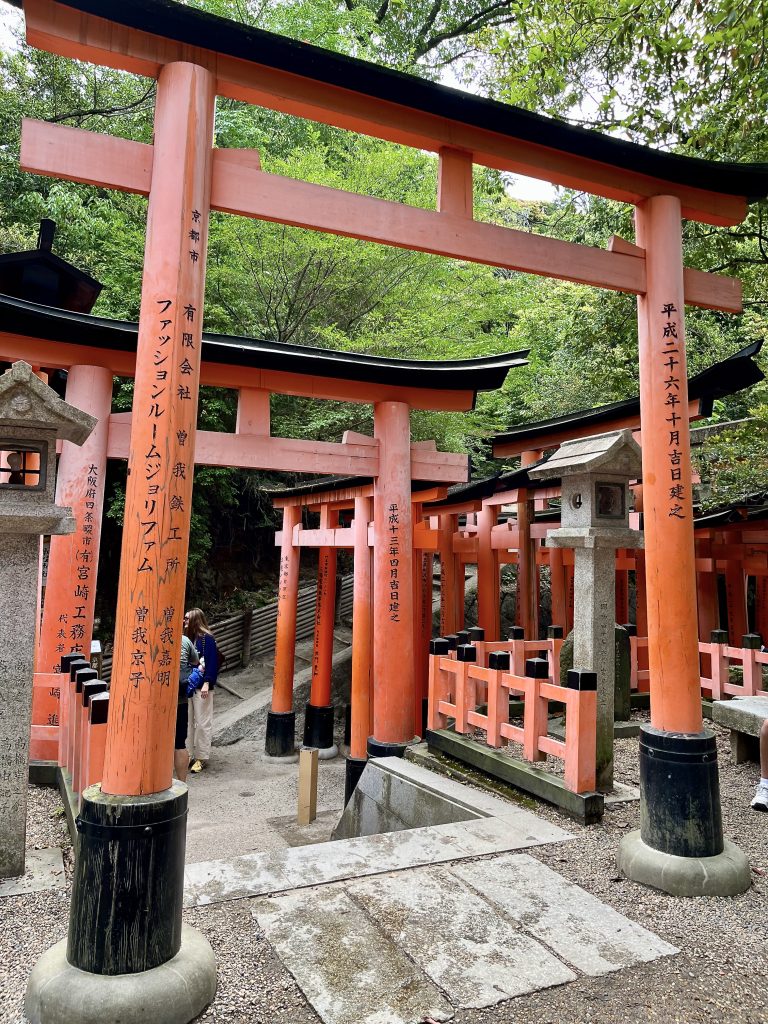
Start your morning early at Fushimi Inari Taisha, Kyoto’s most iconic shrine. The famous path of 10,000 vermilion torii gates winds up the forested slopes of Mount Inari, forming a tunnel of red that seems to stretch endlessly into the mist.
What to See & Do:
Main Shrine Complex: Marvel at the vibrant gates and intricate fox statues, believed to be messengers of Inari, the Shinto god of rice and prosperity.
Senbon Torii Path: The “thousand gates” trail — climb at least halfway for peace and fewer crowds.
Yotsutsuji Intersection: Midway viewpoint overlooking Kyoto’s skyline — breathtaking at sunrise.
Next, take a short walk or train ride to Tofuku-ji Temple, one of Kyoto’s oldest and most beautiful Zen temples. Its Hojo Garden features rock and moss patterns representing rivers and oceans, and in autumn, the Tsutenkyo Bridge becomes a tunnel of fiery red maples.
End your day in Fushimi Ward, Kyoto’s historic sake-brewing district. Stroll along the Fushimi Sake District, where cedar-scented breweries line the Horikawa River. Visit Gekkeikan Okura Sake Museum for tastings and to learn about Japan’s centuries-old brewing techniques.
🦊 Fun Fact: The fox statues at Fushimi Inari often hold a key in their mouths — symbolizing the key to the rice granary.
Northern Kyoto — Bamboo Forests & Golden Temples
This is Kyoto at its dreamiest. Start your day in Arashiyama, on the city’s western edge, surrounded by lush mountains and flowing rivers.
What to See & Do:
Arashiyama Bamboo Grove: A surreal, whispering forest of towering green stalks — walk through early morning to avoid crowds and catch the perfect light.
Tenryu-ji Temple: A UNESCO World Heritage Zen temple with stunning gardens that blend seamlessly into the surrounding landscape.
Togetsukyo Bridge: Cross this “Moon Crossing Bridge” for postcard-perfect views of the Katsura River and Arashiyama hills.
Okochi Sanso Villa: A beautifully landscaped garden villa once owned by a famous actor — includes a matcha tea with a view.
Iwatayama Monkey Park: A short hike leads to panoramic views of Kyoto and playful wild macaques (bring a telephoto lens for photos).
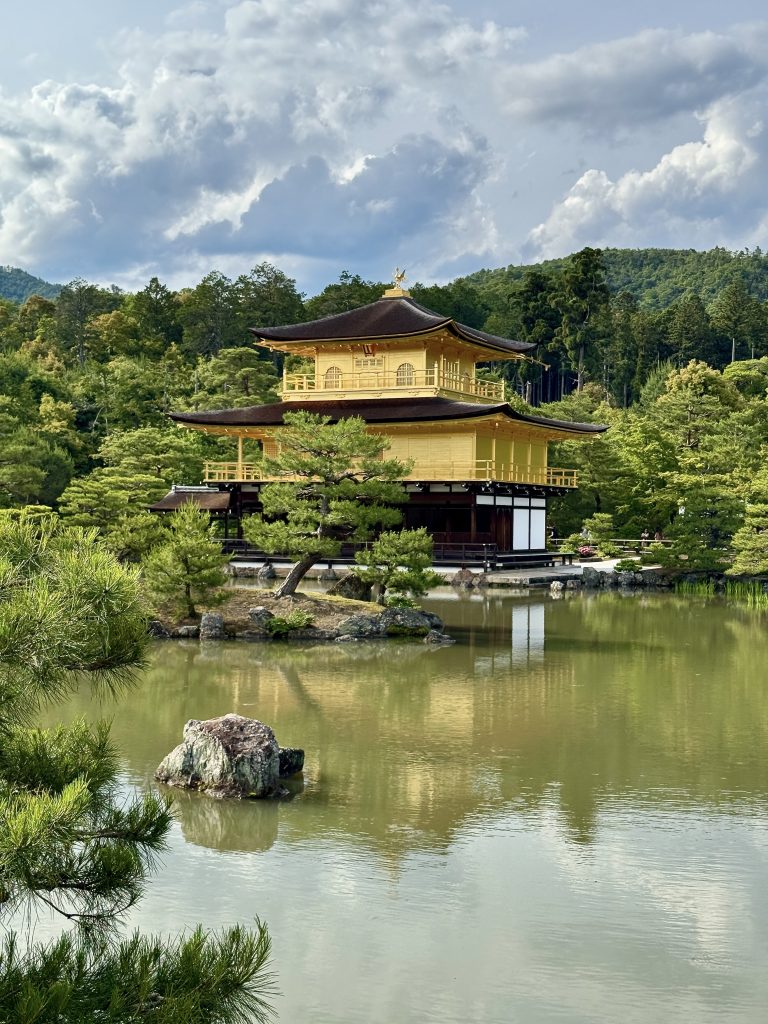
In the afternoon, head to Kinkaku-ji, the Golden Pavilion, a shimmering Zen temple covered entirely in gold leaf. It glows in the sunlight and reflects perfectly in its mirror-like pond.
Nearby, Ryoan-ji Temple offers one of Japan’s most famous Zen rock gardens, a minimalist masterpiece of raked gravel and carefully placed stones that invite quiet reflection.
🎋 Fun Fact: The sound of wind rustling through Arashiyama’s bamboo forest is one of Japan’s officially designated “100 Soundscapes of Japan.
Day Trip to Nara — Sacred Deer & the Great Buddha
Take a short 45-minute train ride from Kyoto to Nara, Japan’s first permanent capital (710 AD) and a city of tranquil parks and ancient temples.
What to See & Do:
Todai-ji Temple: Home to the colossal Daibutsu (Great Buddha) — a 15-meter bronze statue inside a massive wooden hall (one of the world’s largest).
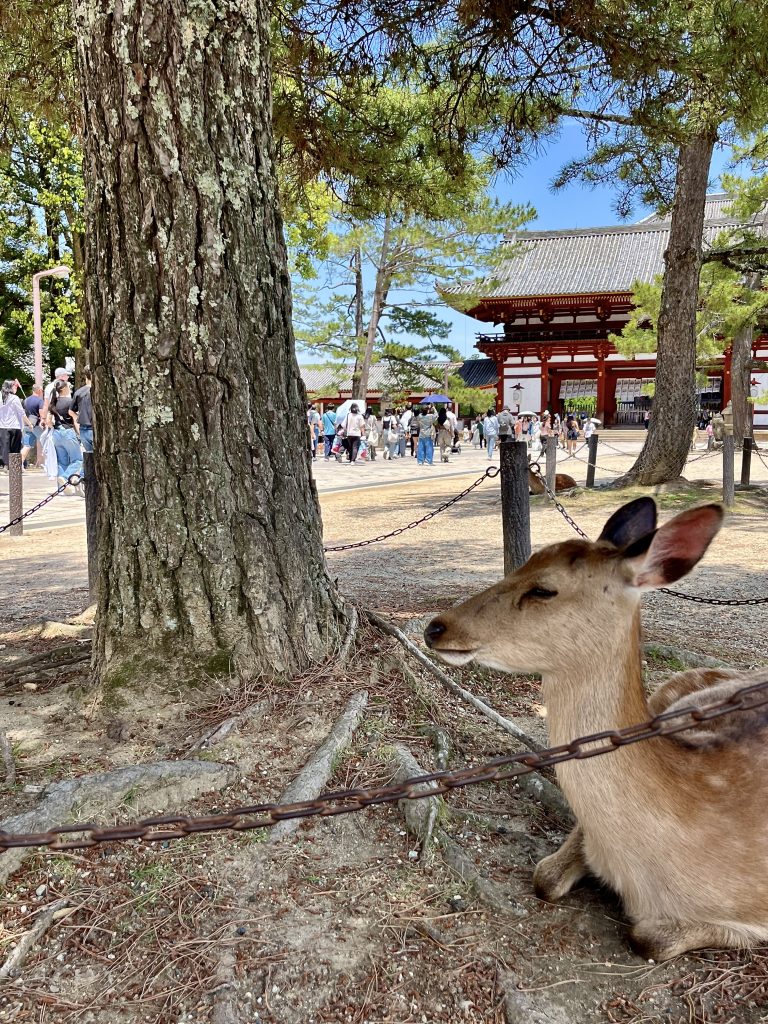
Nara Park: Over a thousand free-roaming deer wander the park, bowing politely in exchange for special “shika senbei” crackers.
Kasuga Taisha Shrine: A vermilion Shinto shrine lined with thousands of stone lanterns, especially atmospheric in soft morning light.
Naramachi Old Town: A charming area of preserved wooden merchant houses, craft shops, and peaceful tea cafés.
💡 Travel Tip: Bring deer crackers — but guard your map and clothes! The deer are friendly but cheeky.
🦌 Fun Fact: Nara’s deer have been considered sacred messengers of the gods for over 1,000 years.
Osaka — Japan’s Culinary Playground
From Kyoto, it’s just a 30-minute train ride to Osaka, Japan’s third-largest city — loud, fun, and absolutely obsessed with food. Locals have a saying: “Kuidaore”, meaning “to eat until you drop.”
What to See & Do:
Dotonbori: The heart of Osaka nightlife — neon signs, street food stalls, and the famous Glico Running Man billboard. Try takoyaki (octopus balls), okonomiyaki (savory pancake), and kushikatsu (deep-fried skewers).
Shinsekai: A retro district filled with Showa-era nostalgia, local eateries, and the glowing Tsutenkaku Tower.
Osaka Castle: A beautifully restored landmark surrounded by gardens; climb the tower for panoramic city views.
Umeda Sky Building: Ride the glass elevator to the Floating Garden Observatory — perfect for sunset or a night panorama.
Kuromon Ichiba Market: A lively food market with over 150 stalls selling seafood, wagyu skewers, and mochi.
🍢 Fun Fact: Many locals refer to Dotonbori as “Osaka’s kitchen,” and it’s been a food hub since the 1600s.


